 AstroLab
ASTROLAB COLLECTIONS
Planets and moons
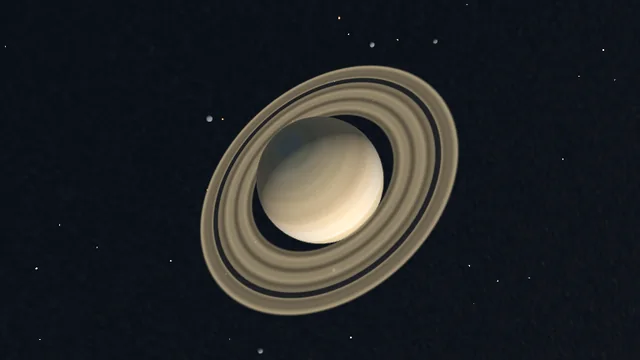
Saturn
A vast disk made of particles.
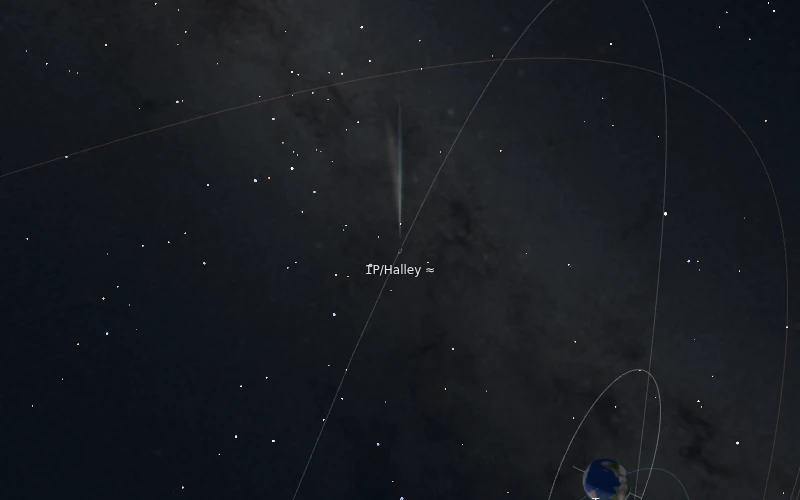
Halley · the 1986 passage
Follow Halley from the Sun to its passage near Earth.
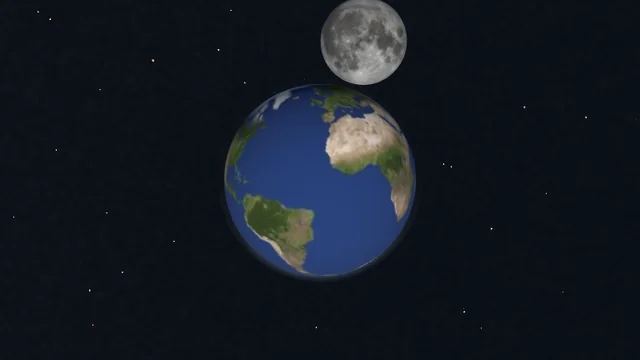
Earth
Our planet and its natural satellite
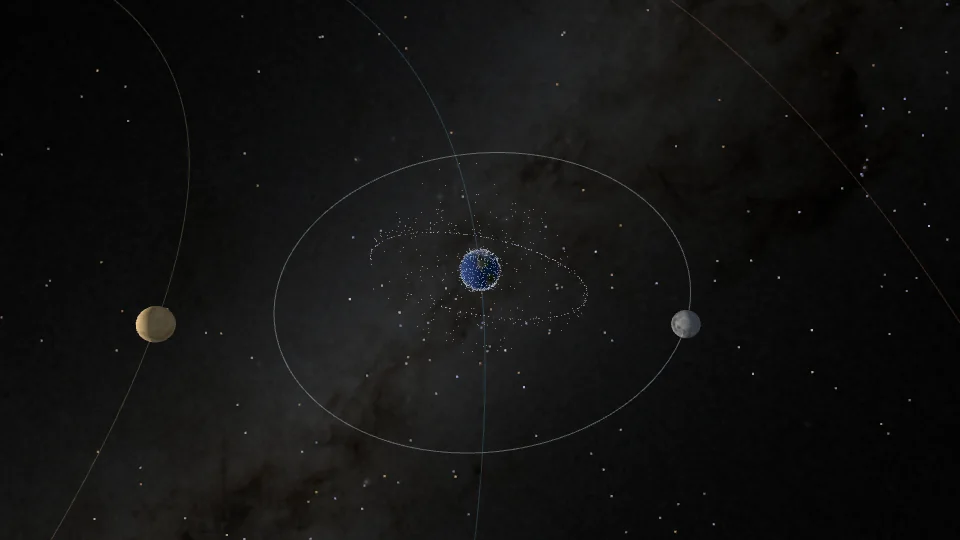
Satellites around Earth
An orbital dance around our planet
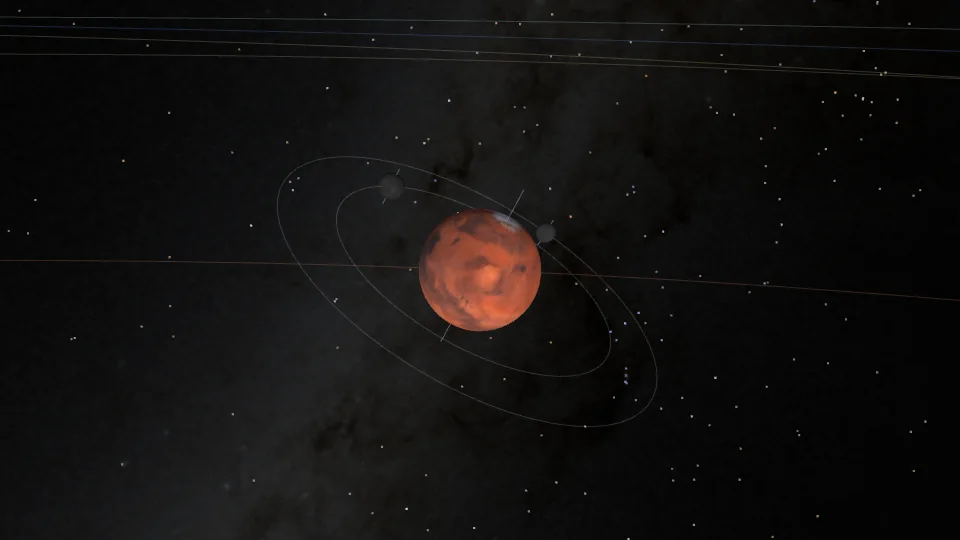
The two moons of Mars
Phobos races; Deimos takes its time.
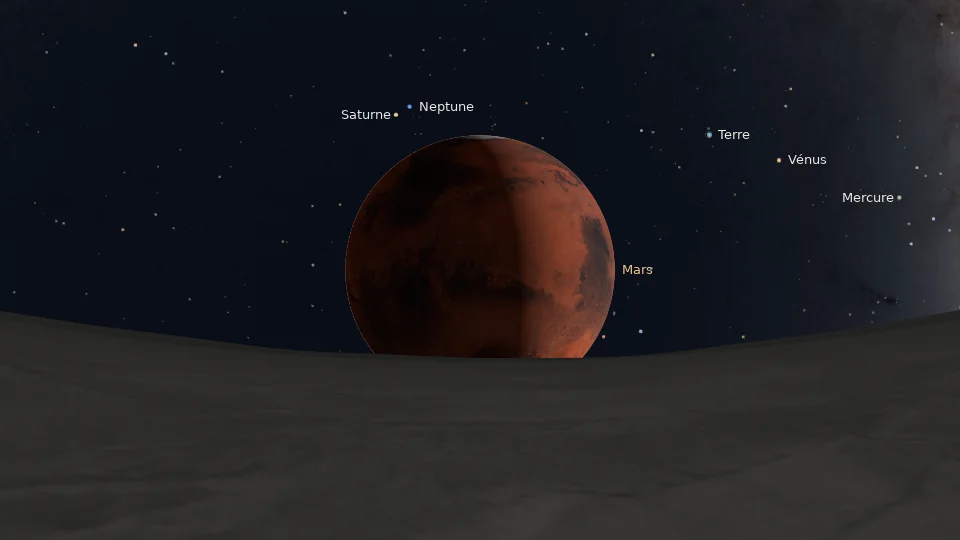
Mars on the horizon of Phobos
A vast world, lit from the side
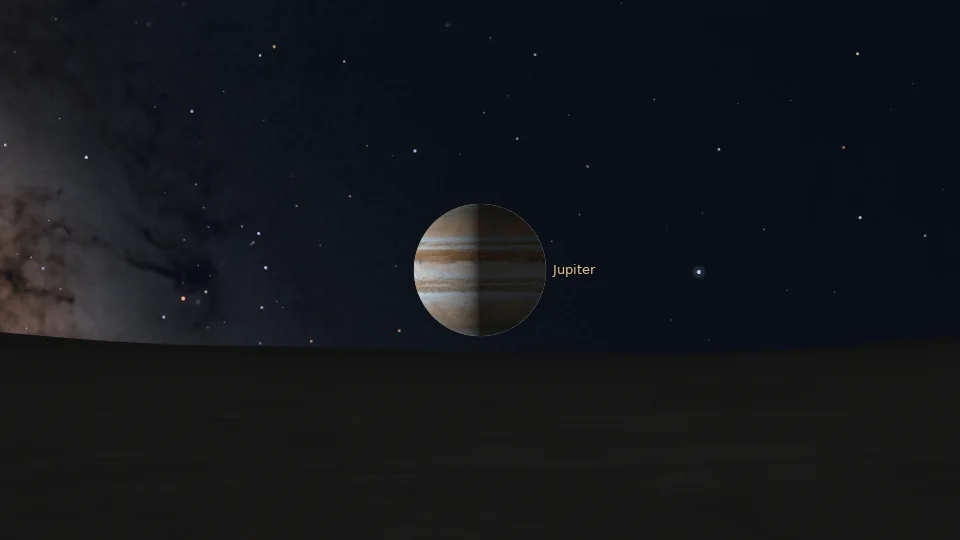
Jupiter from Europa’s ice
The giant at the edge of the sky
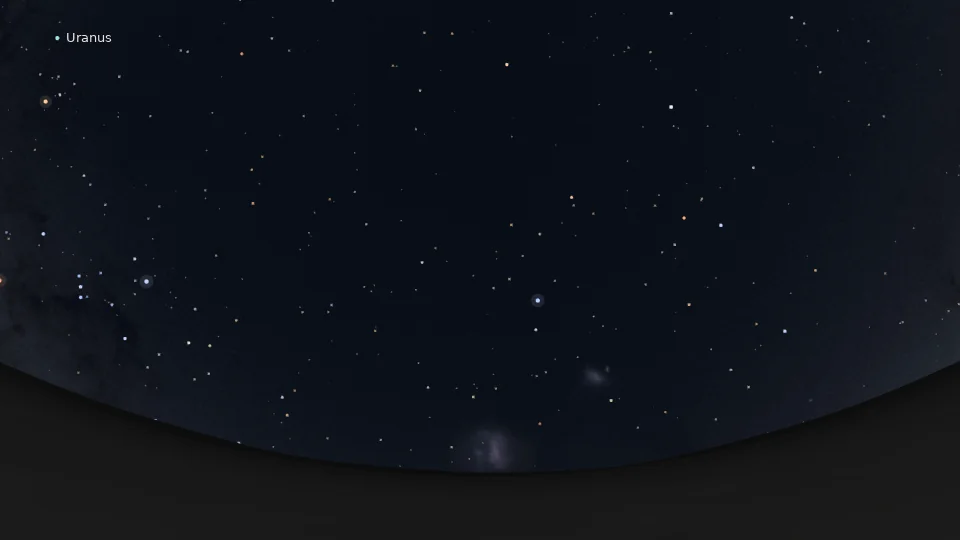
The Moon’s far side
A sky with no Earth overhead.
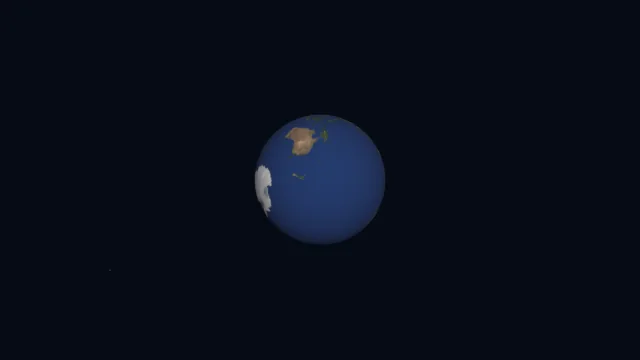
Earth sways in the lunar sky
Lunar libration · view from the Moon
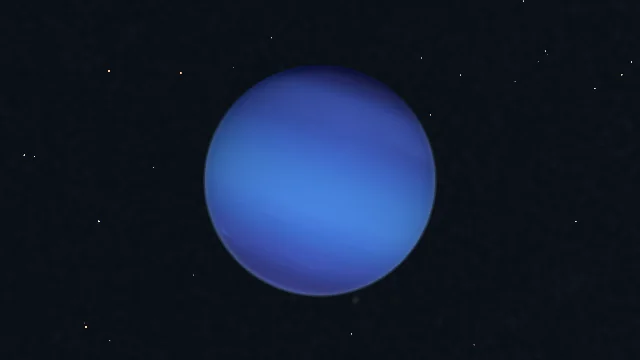
Neptune
The outermost of the eight planets.
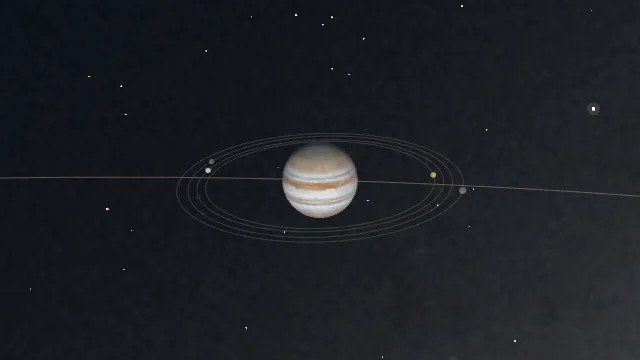
Jupiter
A giant planet surrounded by moons.
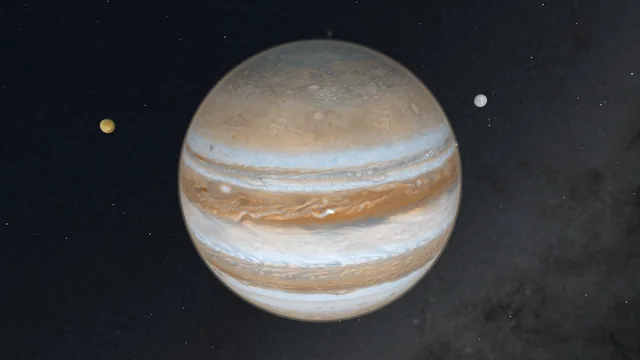
Jupiter · the cloud limb
A close-up of Jupiter’s sunlit limb.
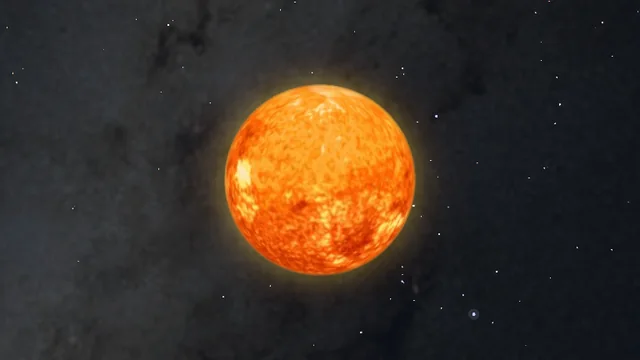
Our star
The system’s source of light.
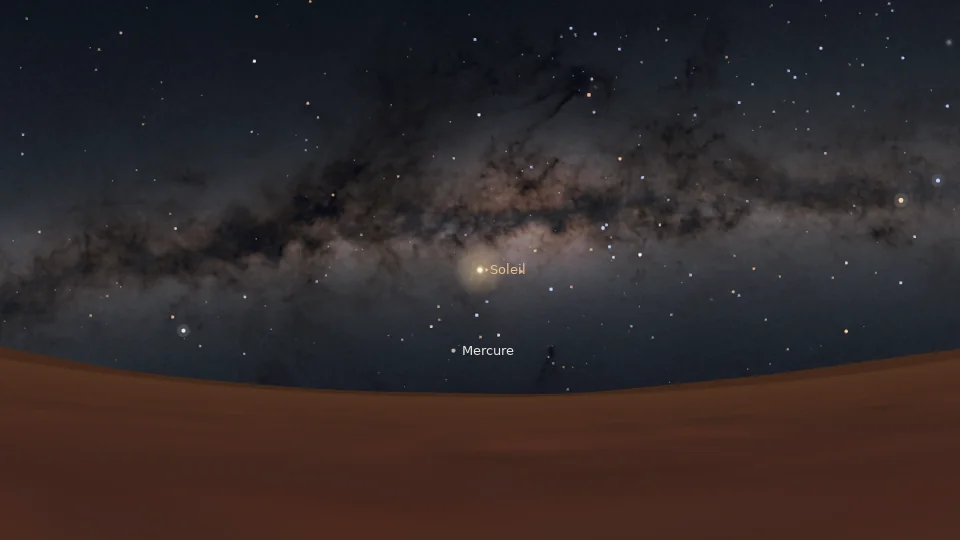
The Sun from Mars
A viewpoint on the Martian equator.
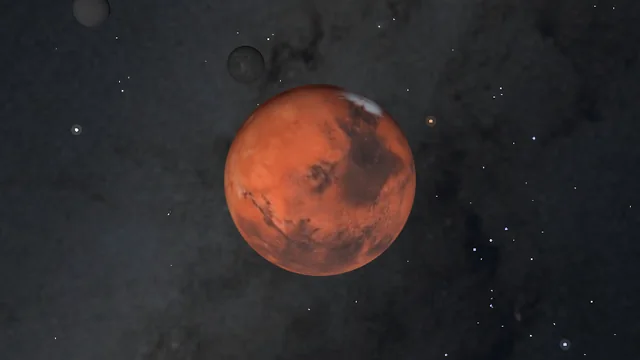
Mars
Compare two rocky worlds.
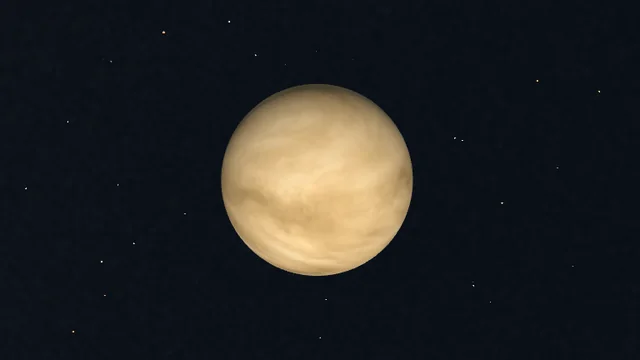
Venus
A dense atmosphere and retrograde rotation
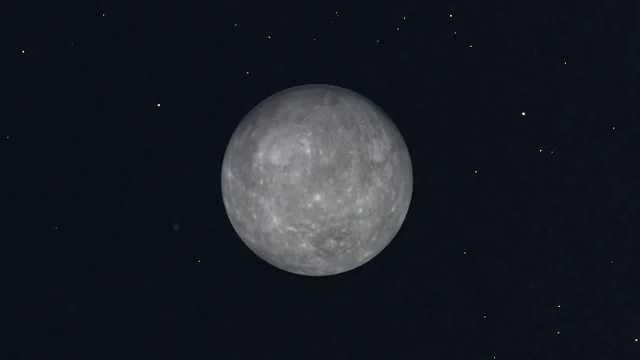
Mercury
The planet closest to the Sun
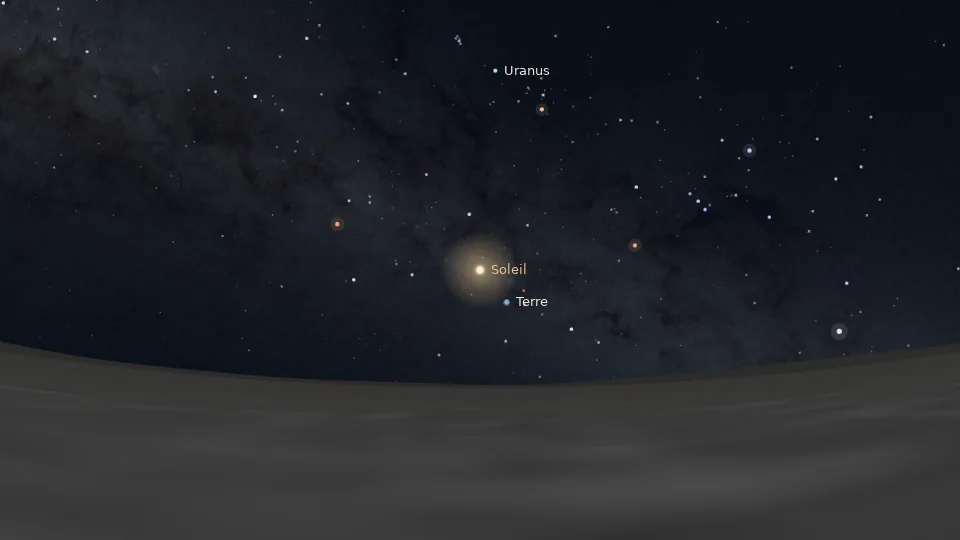
Under Mercury’s Sun
The sky of an inner planet.
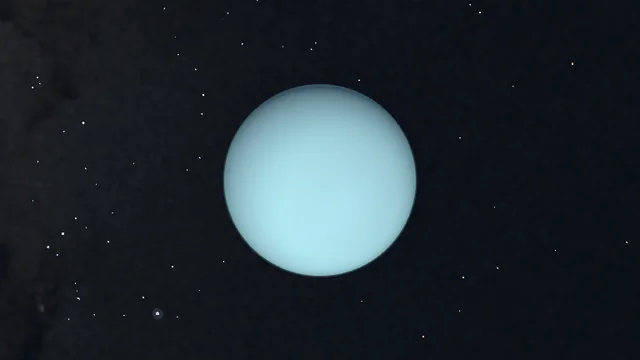
Uranus
An axis very different from ours.
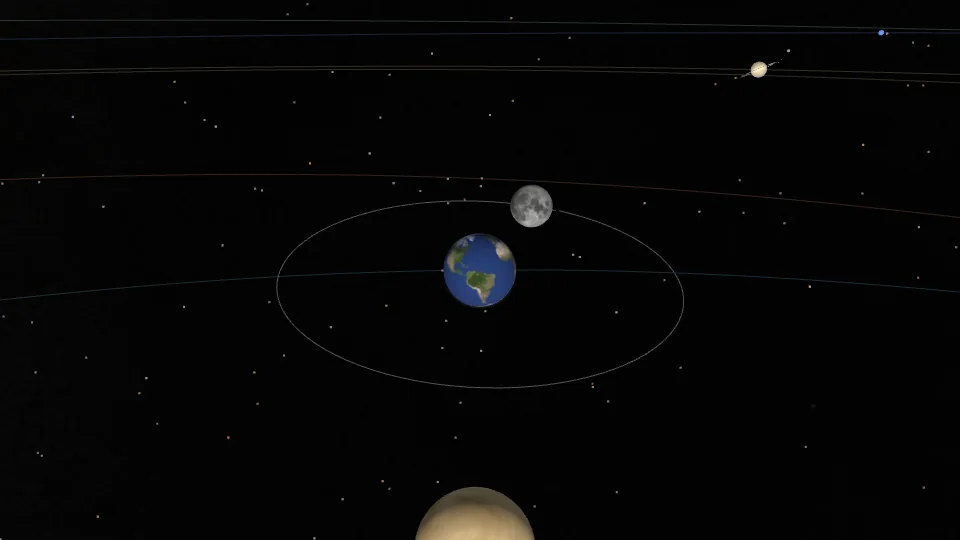
Our Earth–Moon pair
See the distance between two worlds.
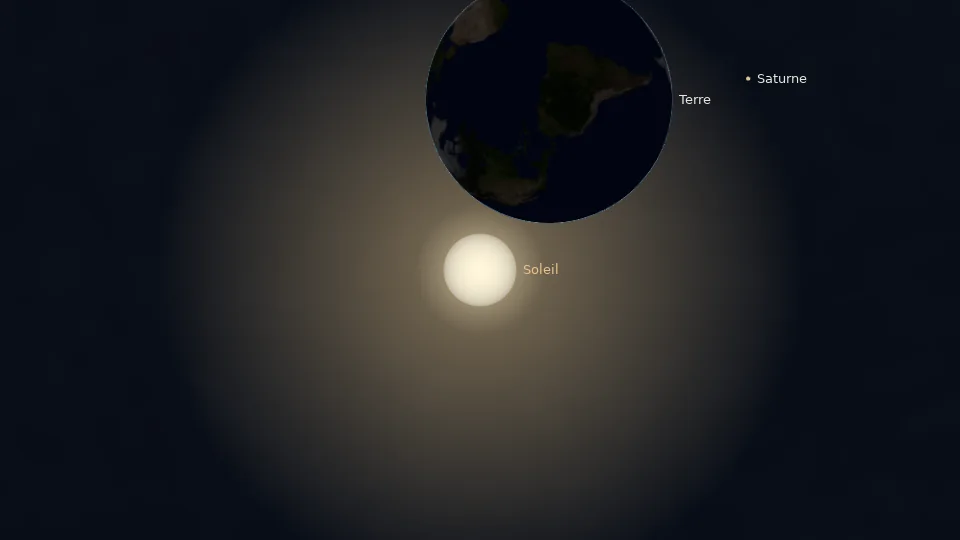
A solar eclipse from the Moon
Earth passes in front of the Sun
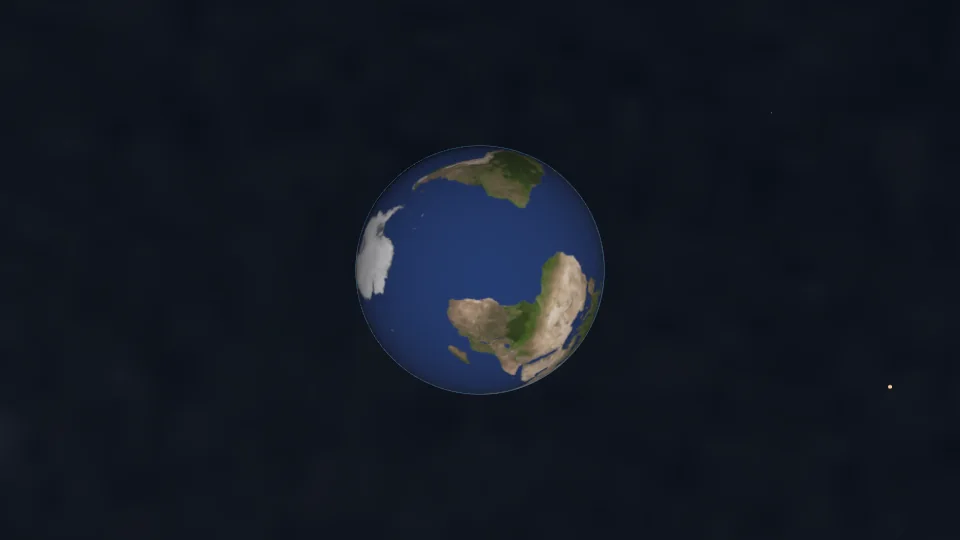
Earth from the Moon
Change worlds, change your frame of reference.
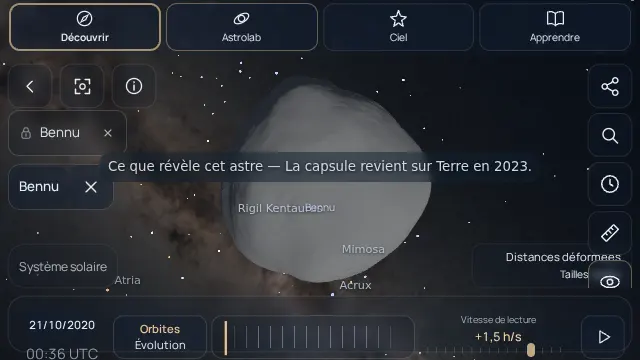
Bennu · seconds to collect billions of years
Bennu preserves ancient Solar System material. OSIRIS-REx travelled there to bring a sample back to Earth.
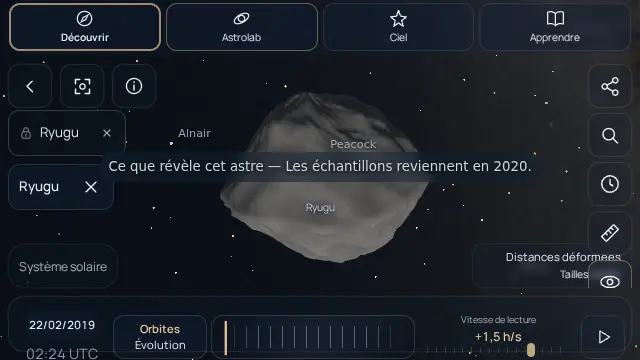
Ryugu · bringing a dark world home
Ryugu resembles a spinning top covered in boulders. Hayabusa2 selects a sampling site amid this rugged surface.
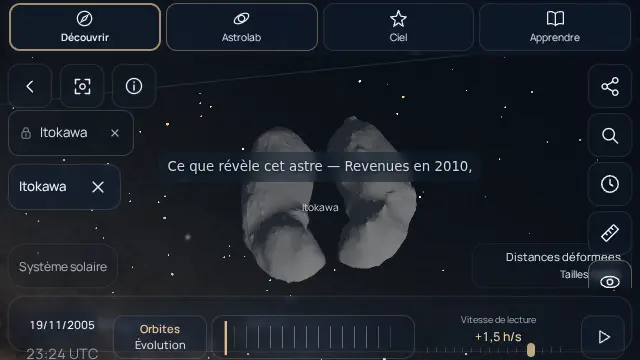
Itokawa · dust connects two worlds
Itokawa is not a monolithic rock: Hayabusa’s observations reveal a collection of debris held together by gravity.
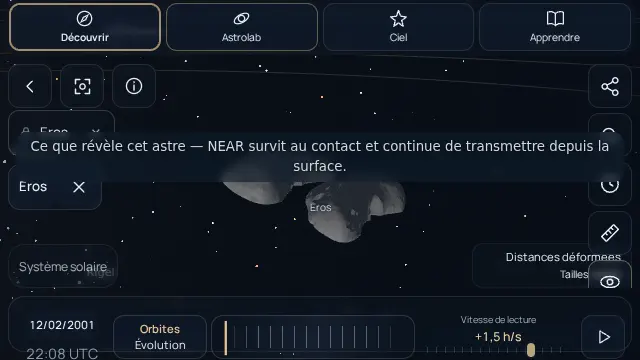
Eros · the orbiter that survived landing
NEAR Shoemaker has orbited Eros since February 2000. The asteroid becomes a landscape of craters, ridges and boulders.
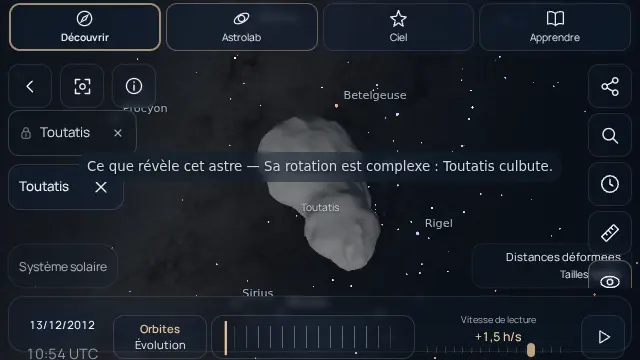
Toutatis · a tumbling world
Toutatis has an elongated, two-lobed shape. Radar observations revealed its form before a spacecraft visited it.
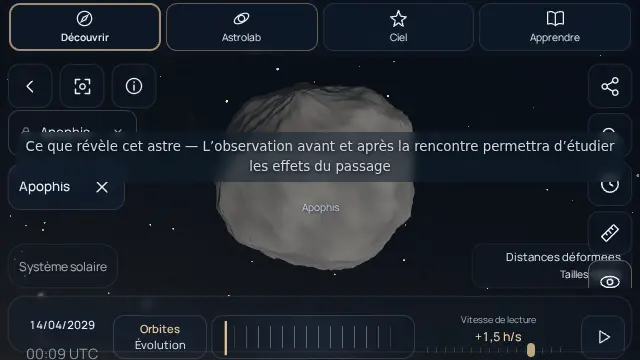
Apophis · Earth bends the route
On 13 April 2029, Apophis is predicted to pass very close to Earth. This sequence is a forecast, not an already observed event.
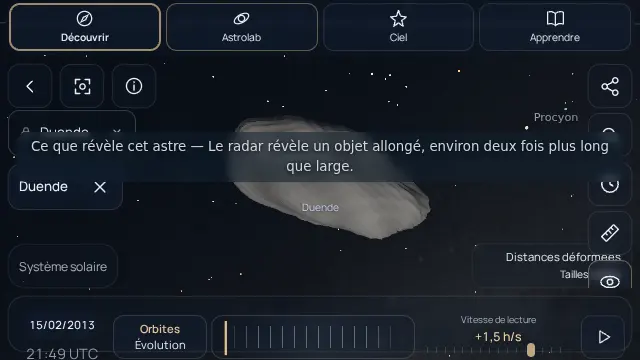
Duende · below geostationary altitude
Duende, then known as 2012 DA14, passes Earth on 15 February 2013. It is a small asteroid only a few tens of metres across.