 AstroLab
Updates — 30 October 2026
Website and app
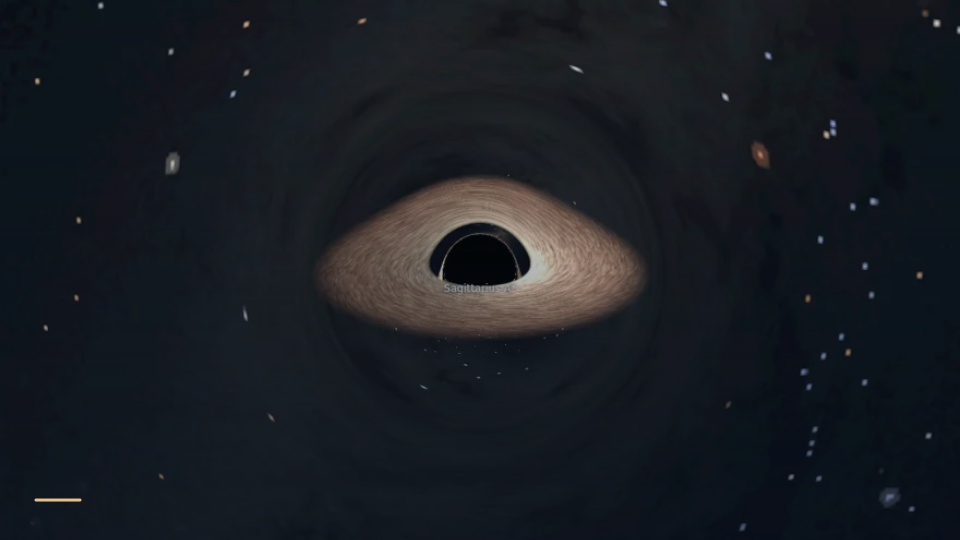
Integrated reader
Films, tutorials and views open in the site reader. Returning preserves catalogue filters and scroll position.
https://astrolab.academy/en/discover/film-presentation.htmlContext and limits
The reader reuses the site’s application runtime. Desktop controls appear on hover; film seeking and compact dialogs have been refined.
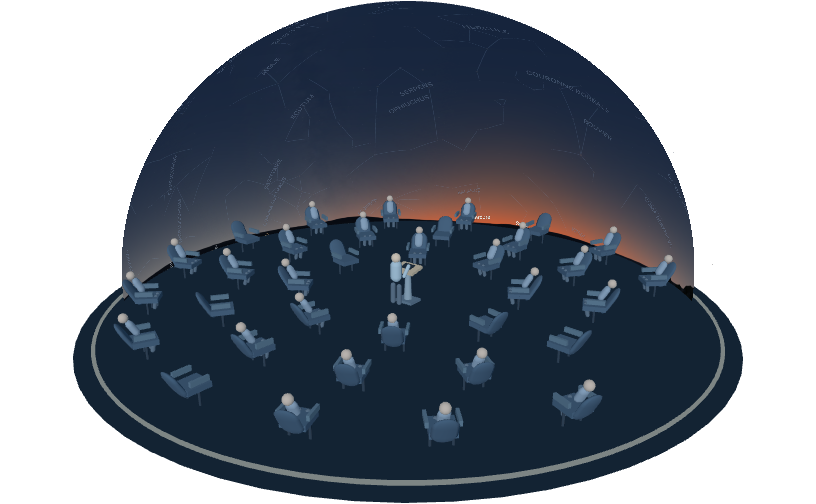
Controls and uses
The App page presents desktop, tablet and phone controls. Share knowledge describes dome, classroom and virtual reality uses.
https://astrolab.academy/en/transmettre.htmlhttps://astrolab.academy/en/application.htmlContext and limits
These scenes illustrate intended uses. They do not certify a projector, installed dome or physical headset.
Agenda
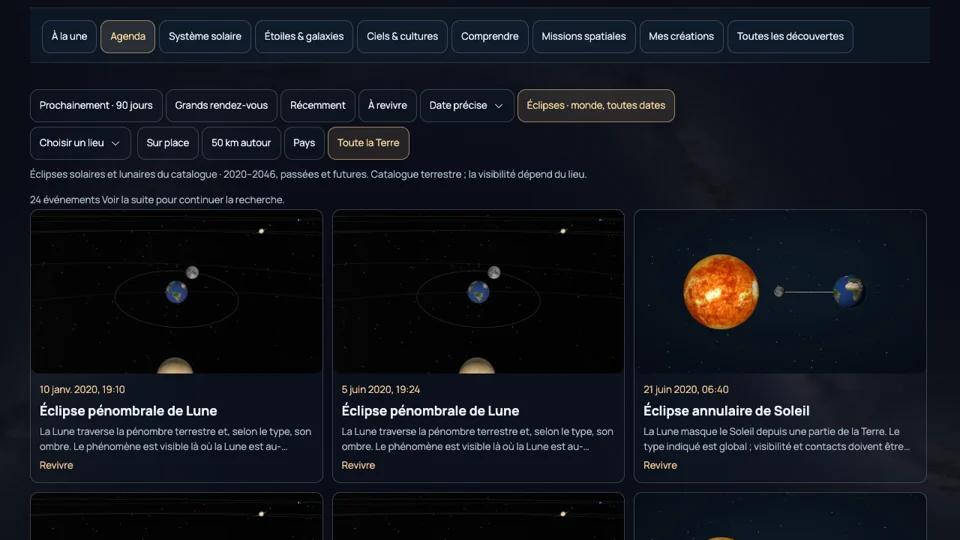
Events by place and date
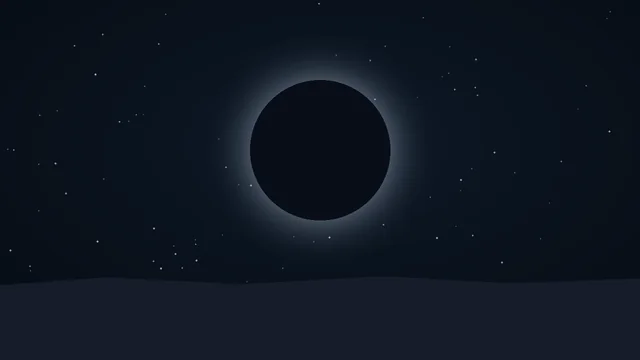
Agenda groups eclipses, oppositions, elongations and close approaches. Choose a place and period to view upcoming events.
https://astrolab.academy/en/?topic=agenda#discoveriesContext and limits
The initial catalogue contains 818 events; Upcoming defaults to 90 days. The 50 km and country scopes sample places and are not exhaustive. Weather and local terrain are not predicted.
Circumstances and simulations
Event details calculate circumstances for the chosen location and may suggest another site for an invisible eclipse. Sequences let you follow stages and adjust time.
https://astrolab.academy/en/discover/eclipse-2027-08-02-luxor.htmlContext and limits
A proposed simulation location does not replace the saved Agenda location. Historical dates remain replays; Halley 2061 is an annual marker, not a precise hourly prediction.
Editorial selection
Featured selection
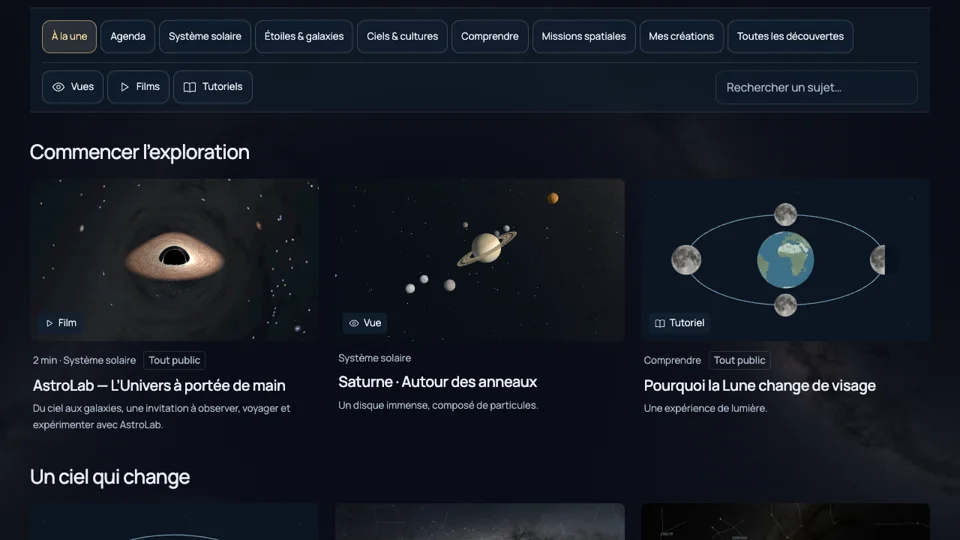
Featured combines events soon visible from your location with themed discoveries. Opened items remain available in the full catalogue.
https://astrolab.academy/en/?topic=featured#discoveriesContext and limits
Selection uses local opening history. It does not infer completion, understanding or skill level. The presentation keeps priority among remaining eligible suggestions.
Content next steps
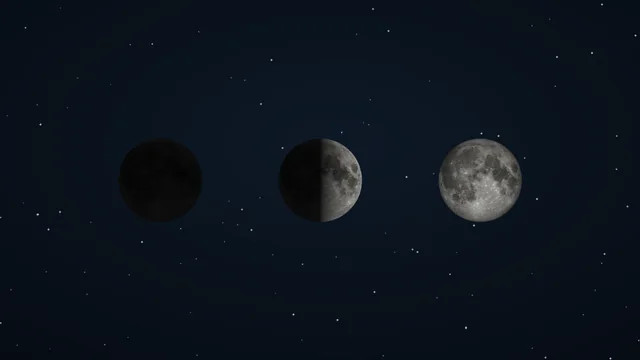
Film and tutorial endings offer up to three links to explore further, change perspective or experiment. The next item does not start automatically.
https://astrolab.academy/en/discover/learn-phases.htmlContext and limits
The relationships cover 21 films and 30 tutorial concepts. Relevance comes before history; a contextual view is not presented as proof of a phenomenon it does not simulate.
Catalogue search
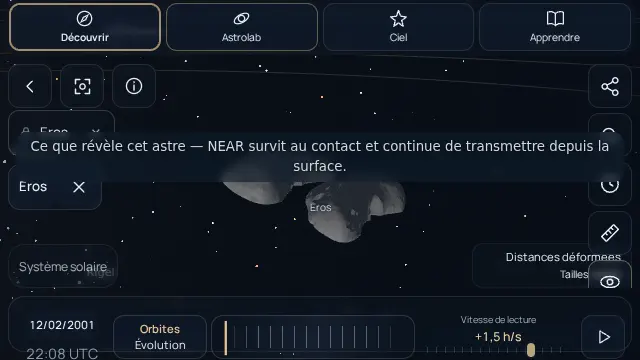
Search covers all discoveries, including Eros, despite active filters. Clearing the query or returning restores the topic, filters and scroll position.
https://astrolab.academy/en/?topic=all#discoveriesContent
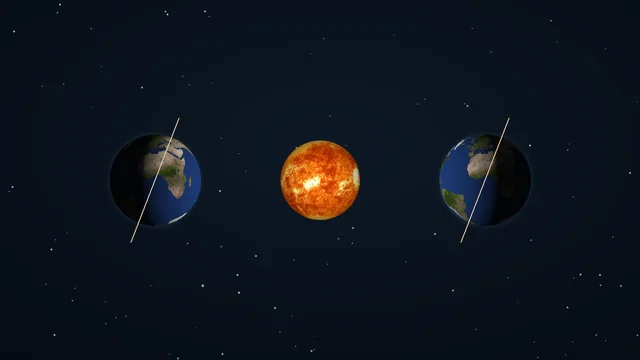
Seasons and tilt
The tutorial compares hemispheres and connects axial tilt, orbit and day length. At zero tilt, labels no longer indicate seasons.
https://astrolab.academy/en/discover/learn-seasons.html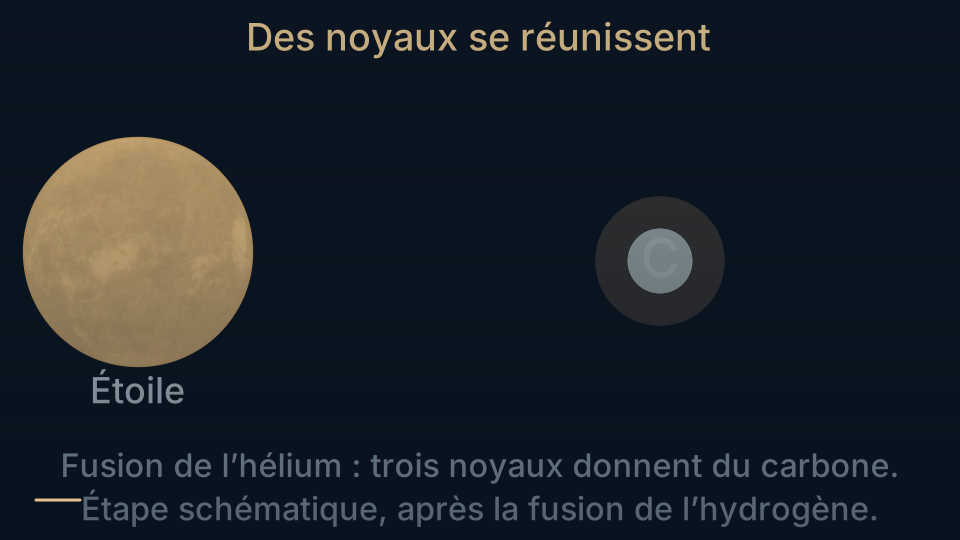
Film and tutorial revisions
Texts, exercises and subtitles were revised in French and English. The Earth-to-galaxies and atom stories distinguish their stages and landmarks more clearly.
https://astrolab.academy/en/discover/film-origin-elements.htmlhttps://astrolab.academy/en/discover/film-earth-to-galaxies.htmlContext and limits
The audit covers 21 film scripts and 30 concepts; calculations become optional deeper material. This is not exhaustive visual certification. The Rigel-associated collapse scenario remains outside Featured pending rendering improvements.
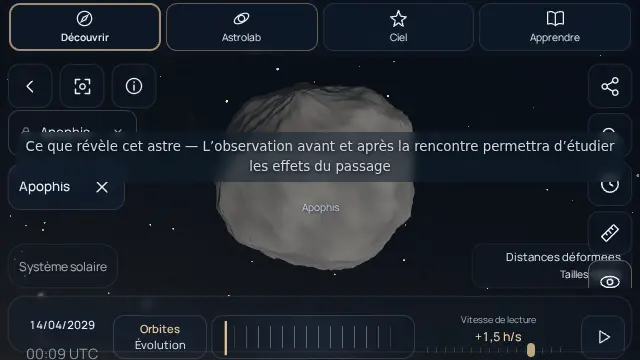
Halley and asteroids
Sequences show orbit, approach and departure. Halley follows its 1986 passage; Apophis, Duende, Toutatis, Bennu, Ryugu, Itokawa and Eros have dated journeys.
https://astrolab.academy/en/discover/asteroid-apophis.htmlhttps://astrolab.academy/en/discover/comet-halley.htmlContext and limits
The latest asteroid journeys cover 240 days before and after encounters. Outside precise windows, ellipses are approximate; framing does not reconstruct a spacecraft camera. Apophis 2029 is a forecast.
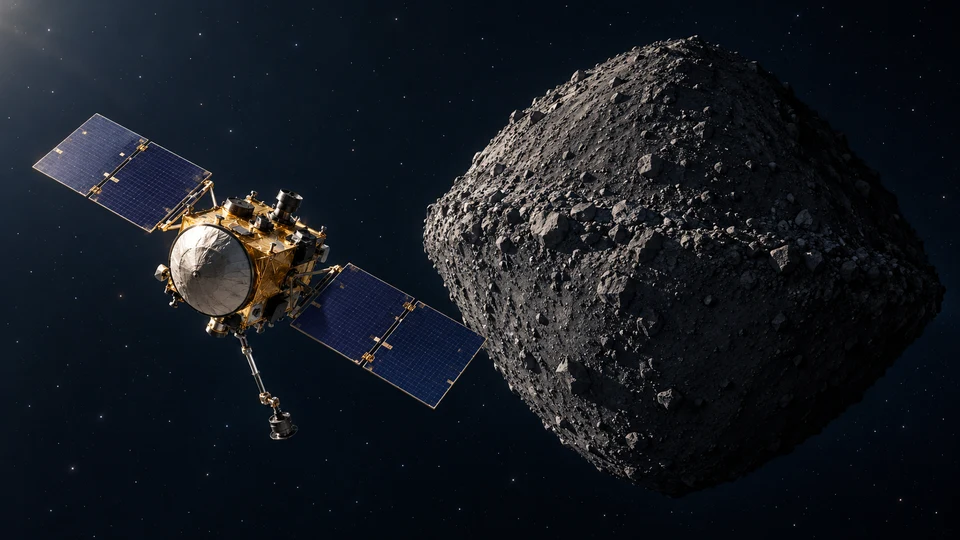
Rosetta, Apollo, OSIRIS-REx
Rosetta’s approach sequence and Apollo playback were corrected. The OSIRIS-REx cover is identified as an editorial illustration.
https://astrolab.academy/en/discover/rosetta.htmlhttps://astrolab.academy/en/discover/osiris-rex.htmlContext and limits
Rosetta’s trajectory samples are preserved. The OSIRIS-REx cover is not evidence of exact spacecraft geometry or simulation rendering.
Controls
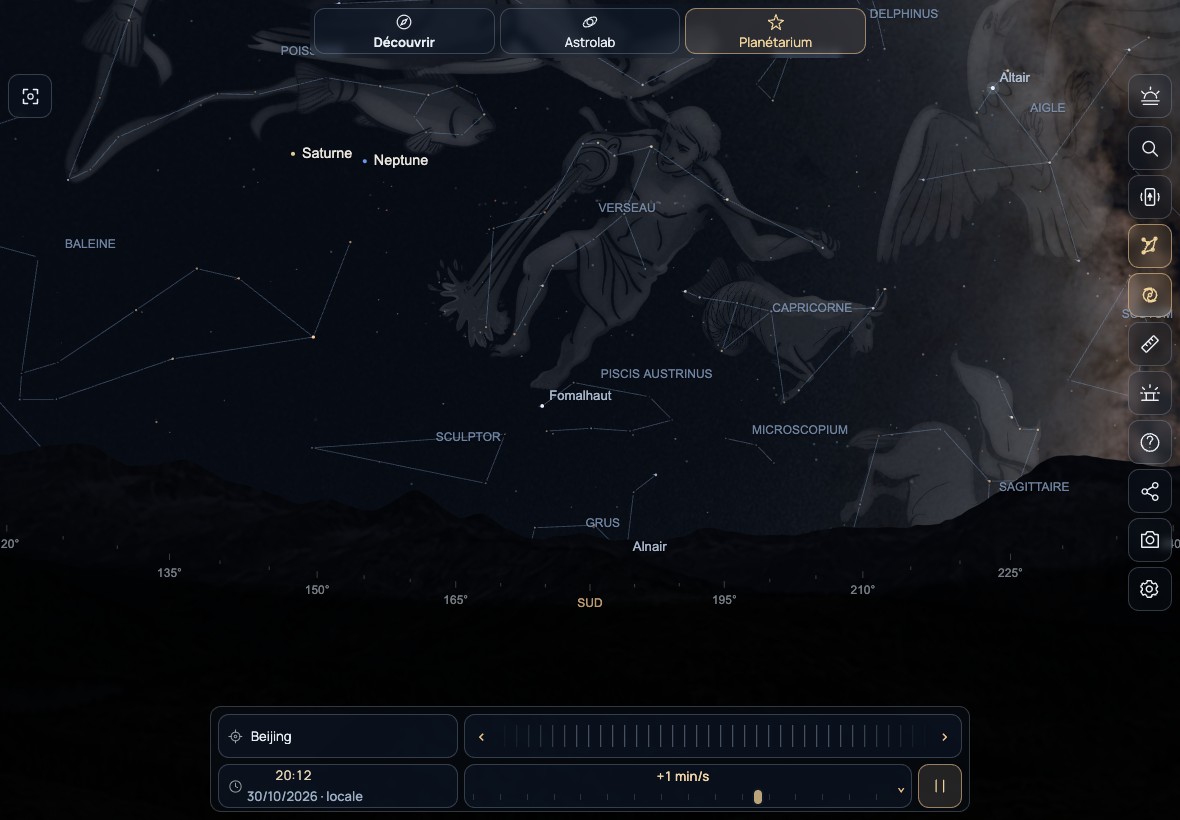
Settings and gestures
Quick settings are grouped by category and text scales from 85 to 200%. Site and app share icons and states; two-finger panning works in interactive films.
https://astrolab.academy/app?lang=enContext and limits
Gyroscope activation, initial landscape orientation, labels and tablet scrolling have been corrected. Automated sensor checks do not replace a physical tablet test.
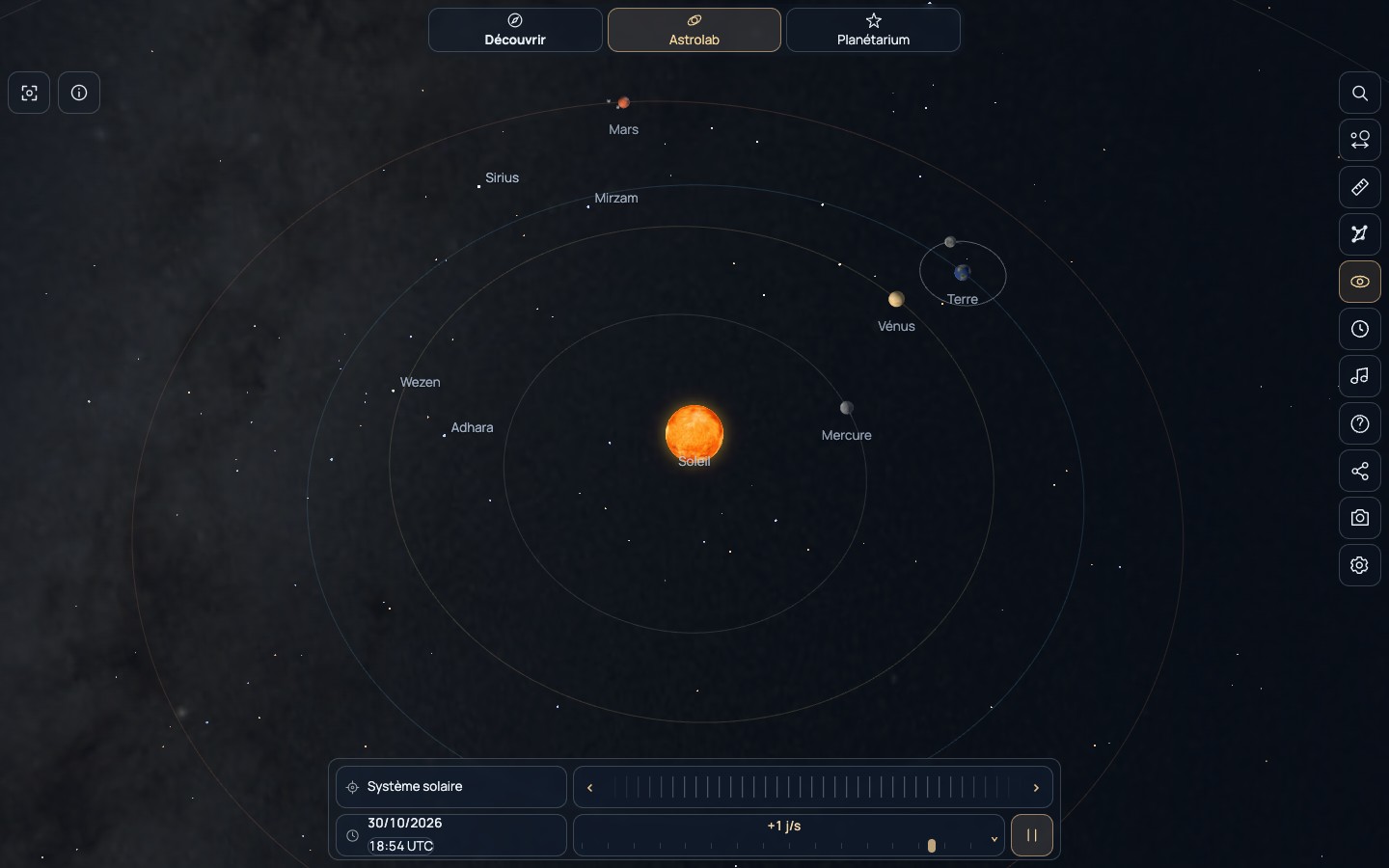
Loading and updates
The site prepares shared resources without starting a hidden 3D scene. Music preference is remembered; deferred updates remain available and embedded scenes synchronise versions.
https://astrolab.academy/en/application.htmlContext and limits
Caching respects slow or data-saving connections; textures remain progressive. This does not guarantee instant startup or offline access to every previously unopened page.
Shipped 28 October
Gravity: grid and black-hole merger
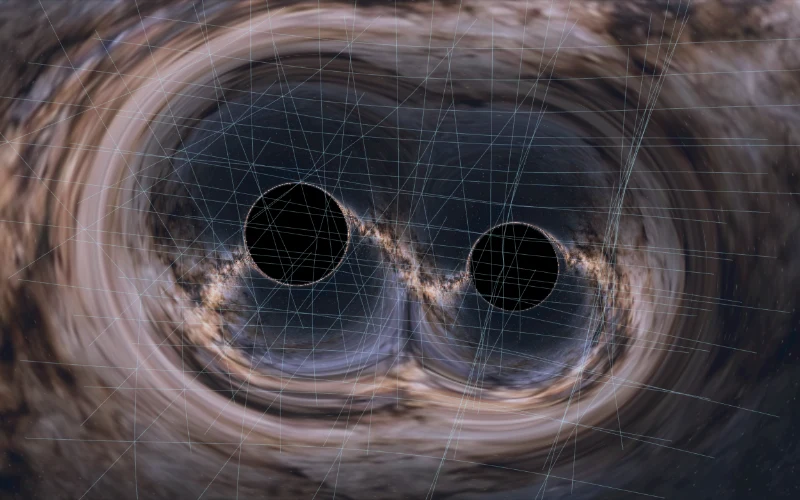
Watch the fall, then replay the wave
Grid points fall with simulation time. The GW150914 film shows the merger, then replays its ending with the grid and wave.
https://astrolab.academy/en/discover/film-gw150914.htmlhttps://astrolab.academy/en/discover/gravity-earth.htmlContext and limits
The fall is Newtonian, not a full relativistic solution. Wave deformation is illustrative and amplified, separate from particle trajectories.
Sources and verification
Period: 28 October 17:08 UTC to 29 October 17:08 UTC (29–30 October, Shanghai time). The gravity section predates this period. Sources: Git history, delivery notes, editorial audits and public pages. Checks are automated and targeted browser journeys, not exhaustive physical-device validation.